
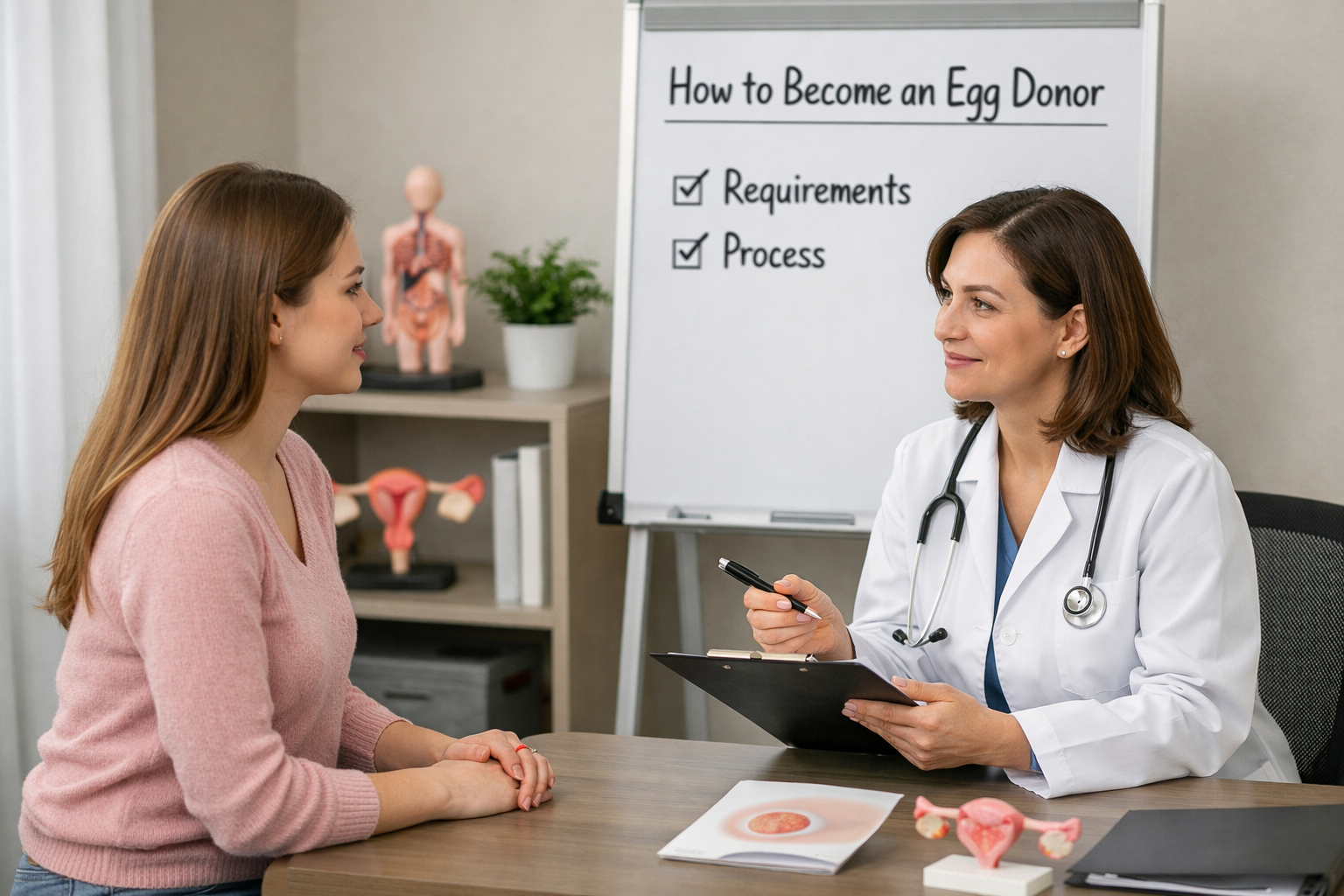
Becoming an egg donor is a meaningful way to help others build a family. Many intended parents depend on donors to achieve their dream of parenthood. If you are thinking about this path, it is important to understand the steps, eligibility, and responsibilities involved.
This guide explains everything in simple terms. It will help you learn how to start your journey with confidence.
What It Means to Become an Egg Donor
To become an egg donor, you agree to donate your eggs to help someone conceive through IVF. The eggs are fertilized in a lab and then transferred to the intended mother or a surrogate.
This process is safe when managed by experienced doctors. Donors receive full medical care and support throughout the journey. It is not just a medical decision. It is also an emotional and thoughtful commitment.
Why Women Choose Egg Donation
There are many reasons why women decide to donate their eggs.
- They want to help others build a family
- They feel proud to make a difference
- They receive medical care and support
- They may receive compensation depending on location
Choosing to become an egg donor is both generous and impactful. It creates a life-changing opportunity for intended parents.
Egg Donor Qualifications
Before starting, you must meet certain egg donor qualifications. These are set to ensure safety for both the donor and the recipient.
Basic Requirements
- Age usually between 21 and 39 years
- Good physical and mental health
- Regular menstrual cycles
- No serious genetic conditions
Lifestyle Criteria
- Non-smoker
- No drug or alcohol abuse
- Healthy body weight
Medical Screening
Doctors perform tests such as:
- Blood tests
- Hormone level checks
- Genetic screening
- Infectious disease tests
Meeting these egg donor qualifications ensures that the process is safe and successful.
Requirements for Egg Donation
Understanding the requirements for egg donation helps you prepare better. These requirements go beyond basic health checks.
Commitment
You must be ready to attend appointments and follow medical advice.
Honesty
Providing accurate medical history is very important.
Emotional Readiness
You should feel comfortable with the idea of donating your eggs.
Legal Consent
You will sign agreements that explain your role and rights.
These requirements for egg donation help maintain a smooth and transparent process.
How to Be an Egg Donor
Many women ask how to be an egg donor. The process is simple when you follow the right steps.
Step 1: Application
You start by filling out an application form. This includes personal and medical details.
Step 2: Screening
Doctors review your health through tests and evaluations.
Step 3: Matching
Your profile is shared with intended parents. They choose a donor based on their preferences.
Step 4: Legal Process
You sign a contract that protects your rights.
Step 5: Medical Preparation
You receive medications to prepare your body for egg retrieval.
Step 6: Egg Retrieval
Doctors collect the eggs through a safe and quick procedure.
Learning how to be an egg donor helps you understand each stage clearly.
Egg Donation Process
The egg donation process is carefully planned and monitored by medical experts.
Initial Consultation
You meet with specialists who explain the process and answer questions.
Hormone Treatment
You take medications to stimulate the ovaries. This helps produce multiple eggs.
Monitoring
Doctors track your progress through ultrasounds and blood tests.
Egg Retrieval Procedure
The eggs are collected using a minor medical procedure. It usually takes about 20–30 minutes.
Recovery
You may rest for a short time and return to normal activities soon.
The egg donation process is safe when done under professional care.
Safety and Risks
Egg donation is generally safe. However, like any medical procedure, it may have minor risks.
Common Side Effects
- Mild discomfort
- Temporary bloating
- Mood changes
Rare Risks
- Ovarian hyperstimulation
- Infection (very rare)
Doctors monitor your health closely to reduce risks. Always choose a trusted clinic or agency.
Emotional Considerations
Donating eggs is not just physical. It also involves emotions.
You may feel proud and happy to help others. At the same time, you may have questions or concerns. Counseling is often provided to support donors emotionally.
Being prepared helps you stay confident throughout the journey.
Benefits of Becoming an Egg Donor
Choosing to become an egg donor offers several benefits.
Helping Others
You give someone the chance to become a parent.
Personal Satisfaction
Many donors feel a sense of pride and fulfillment.
Medical Care
You receive health screenings and professional care.
Compensation
In some countries, donors receive compensation for their time and effort.
Tips for a Smooth Journey
- Choose a trusted clinic or agency
- Follow all medical instructions
- Stay honest about your health history
- Take care of your physical and mental health
These simple steps can make your experience positive and stress-free.
Frequently Asked Questions (Q&A)
Q1. How to become an egg donor
To become an egg donor, you must meet health criteria, complete screening, and follow the medical process under expert care.
Q2. What are egg donor qualifications
Egg donor qualifications include age, good health, and no genetic conditions. Medical tests are also required.
Q3. What are the requirements for egg donation
The requirements for egg donation include medical fitness, commitment, and legal consent.
Q4. How to be an egg donor safely
To learn how to be an egg donor, choose a trusted clinic and follow professional guidance.
Q5. What is the egg donation process
The egg donation process includes application, screening, matching, and egg retrieval under medical supervision.
Final Thoughts
Becoming an egg donor is a meaningful and rewarding journey. It allows you to help others build a family while receiving full care and support.
Understanding the egg donation process and meeting the required criteria makes the journey smoother. Take your time to learn, prepare, and choose the right support system. With the right guidance, you can make a positive difference in someone’s life while having a safe and well-managed experience.
For trusted guidance and support, visit Indian Egg Donors or contact (212) 661-7177.