
Quick Summary
- Ideal testing time: Take a home pregnancy test 12 to 14 days after ovulation, usually around the time your period is expected.
- Why timing is important: Pregnancy tests detect hCG, which begins to rise after implantation. Implantation commonly occurs 6 to 12 days after ovulation.
- Testing too early: A test taken before 10 DPO may produce a negative result even if you are pregnant.
- Improve test accuracy: Use your first morning urine and avoid drinking excessive fluids before testing.
- Irregular periods: Ovulation strips and basal body temperature tracking can help estimate when ovulation occurred.
- After fertility treatment: An hCG trigger injection may affect test results, so follow your fertility clinic’s instructions.
- Negative result with no period: Test again after 2 to 3 days. Consult a healthcare professional if your period remains absent.
The Short Answer
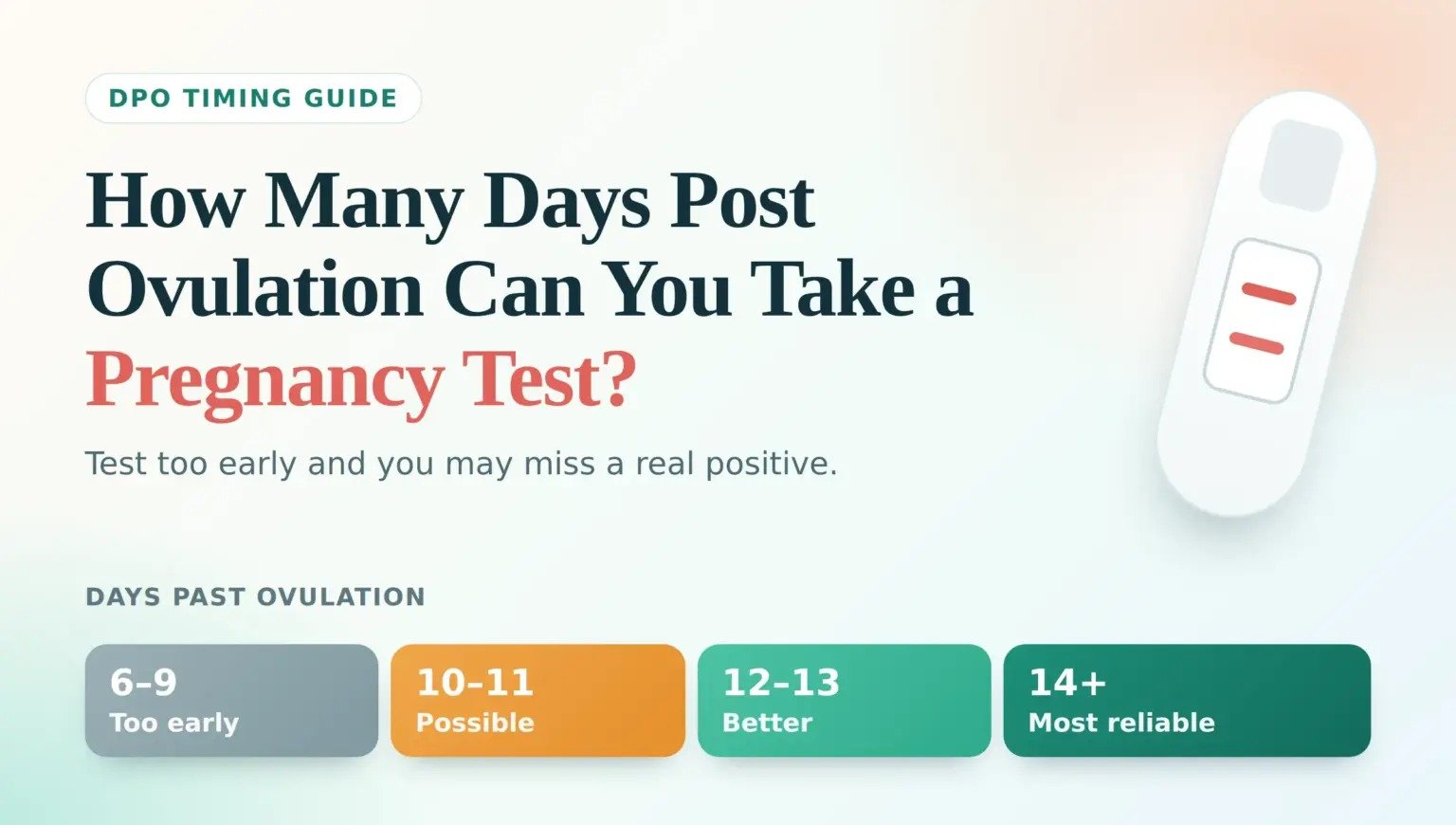
Waiting to find out whether you are pregnant can be stressful, especially when you are eager to get an answer. However, testing too early may leave you with an unclear result. So, how many days after ovulation can you take a pregnancy test for a more dependable result? In most cases, waiting 12 to 14 days past ovulation (DPO) is recommended. This is generally close to the date your menstrual period is expected.
Why Testing Immediately After Ovulation Doesn’t Work
Home pregnancy tests detect a hormone called human chorionic gonadotropin (hCG). Your body begins producing this hormone after a fertilized egg implants into the uterine lining. This process is known as implantation.
Implantation generally takes place between 6 and 12 days after ovulation, although the timing varies. After implantation, hCG levels gradually increase. In early pregnancy, the hormone often rises substantially over a period of approximately two to three days.
Because hCG needs time to reach detectable levels, taking a pregnancy test after ovulation too early may result in a false negative. You might be pregnant, but the test may not yet detect enough of the hormone.
DPO Testing Timeline
| Days Past Ovulation | What the Result May Mean |
| 6 to 9 DPO | Usually too early. Implantation may not have occurred, so a negative result cannot rule out pregnancy. |
| 10 to 11 DPO | A sensitive early pregnancy test may detect hCG, but false negatives remain possible. |
| 12 to 13 DPO | Pregnancy detection becomes more likely as hCG levels increase. |
| 14 DPO and later | Generally a more dependable time to test, around the expected or missed period. |
Tips for Getting a More Reliable Pregnancy Test Result
A few simple steps can help you avoid testing mistakes:
- Choose first morning urine: It is usually more concentrated and may contain higher detectable hCG levels.
- Avoid excessive fluids: Drinking too much water before testing can dilute your urine and make early detection more difficult.
- Follow the instructions: Check the expiry date and read the result within the time window specified by the manufacturer.
What If Your Menstrual Cycles Are Irregular?
Your pregnancy testing timeline depends on knowing approximately when you ovulated. However, conditions such as PCOS can make ovulation unpredictable, making it harder to calculate your DPO accurately.
Ovulation predictor strips, basal body temperature tracking, and an ovulation calculator may help estimate your fertile window. If your cycles are very irregular or you cannot identify your ovulation date, taking a pregnancy test about three weeks after unprotected sex can provide a more reliable indication than relying on an estimated period date.
Pregnancy Testing After Fertility Treatment
If you are receiving fertility treatment, the timing of your pregnancy test is especially important. Some fertility treatments use an hCG trigger injection to help stimulate the final stage of egg maturation and ovulation.
This medication can remain in your body for several days and may cause a false-positive home pregnancy test if you test too soon. The time it takes to clear varies, so testing around 10 to 14 days after the injection may still require individual medical guidance.
After procedures such as IUI or embryo transfer, your fertility clinic will usually provide a specific date for a pregnancy blood test. Follow that schedule rather than relying on an early home test. A blood test can measure hCG levels and help your medical team assess the result more accurately.
Want to read full blog from genuine source?
Genuine Source: How Many Days Post Ovulation